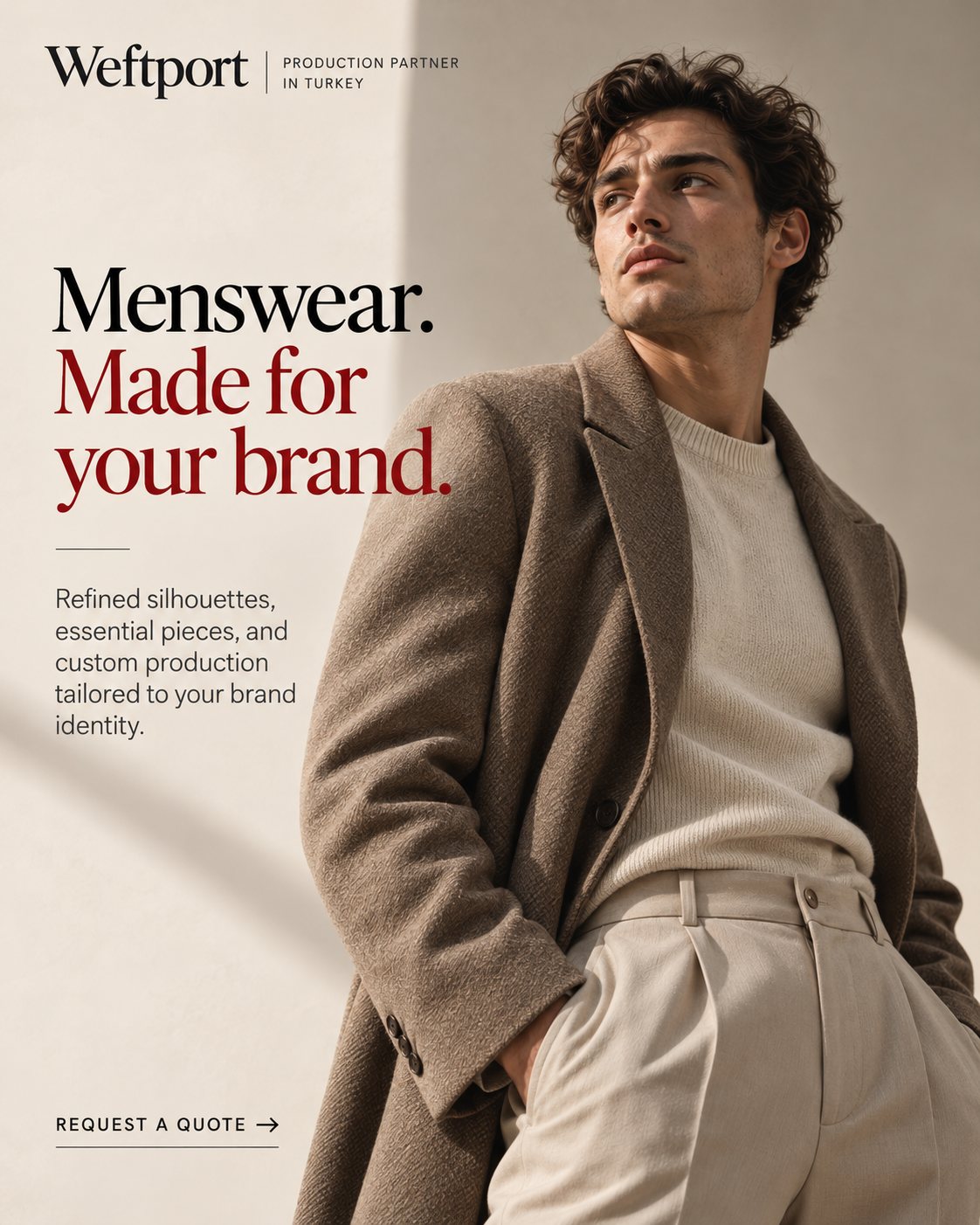
Menswear rewards restraint. Silhouettes are often refined, colours are subdued and customers notice small things: how a coat sits on the shoulder, whether a trouser breaks cleanly at the shoe, whether a knit keeps its shape. About 20 percent of the production at our partner factory in Istanbul is menswear, woven and knitted. This guide covers how to approach a custom menswear project and where to spend your attention.
Fit comes first
In menswear, fit is the product. Customers compare your garment with others they own, so small deviations are visible. Before you develop anything, decide on a fit block: the base proportions you use across styles. If you have an existing garment that fits your customer well, send it or its measurements as a reference. Consistent blocks make a collection feel coherent and make repeat orders easier.
Specify measurements for every size you sell, with tolerances you accept. A typical measurement list covers chest, waist, hip, shoulder width, sleeve length, body length and inseam, depending on the garment.
Coats and jackets
Outerwear is where construction shows. Specify:
- Shell fabric and its weight and handfeel.
- Lining and interlining.
- Shoulder construction: natural, softly padded or structured.
- Lapel width and shape, button stance and count.
- Pocket types and positions.
- Internal details such as labels and inner pockets.
Because tailoring is sensitive to small changes, plan for more than one sample round. Our article on the first sample lists what to review in each round.
Trousers
For men's trousers, rise, thigh and leg opening define the silhouette. Pleats, waistband construction, closure and pocket style should be shown on the sketch. Hem treatment matters: specify a finished hem or an unfinished one for the retailer or customer to adjust. Fabric behaviour also matters, because the same pattern drapes differently in a crisp cotton and a soft wool blend.
Knitwear
Crew necks, roll necks and cardigans depend on yarn, gauge and finishing. Describe stitch structure, neckline and rib details. Check how the garment recovers after stretching and what it looks like after wash, since appearance after wash is part of the quality workflow at our partner factory.
Essentials and layering pieces
Simple tees, long sleeves and light layers have to be consistent across hundreds of pieces. The challenge is shade, measurements and handfeel staying identical from the first piece to the last. Approve colour carefully; a colour light box helps check shade under standard light sources.
Fabric choices
Menswear fabrics are often natural-leaning or blended, but your design decides. What matters is that the fabric suits the construction. A structured coat needs a fabric that holds shape; a soft knit needs yarn that will not pill quickly. If you are unsure, ask for fabric suggestions based on your reference garment. Our guide to choosing fabric explains the main questions.
Branding details
Labels, hangtags, button engraving and packaging contribute to how a men's collection is perceived. Send artwork and placement drawings early. These details are easy to forget and slow to correct.
Minimums and scale
Projects start from 500 pieces and there is no upper limit. Menswear is not our main category, but it is a real part of the production mix, and we treat the specification with the same care as womenswear.
Common menswear pitfalls
Three issues come up repeatedly. First, mixing fit blocks between styles so that a customer who buys two items finds that the sizes feel different. Second, underestimating how much a fabric changes after wash, which affects both measurements and appearance. Third, leaving labelling for last: size, composition and care information for your target market need to be prepared before production, not after. Spending an hour on each of these during briefing saves rounds of correction later.
How to read a sample
When the first menswear sample arrives, put it on a body or a form and check the silhouette from the front, side and back before you measure anything. Then measure against your list and note every deviation with a photo. Judge fabric handfeel, stitching quality, buttonholes and the way seams lie. Send one consolidated list, ranked by importance, so the factory can respond in a single round rather than many small ones.
Next step
Explore the collections page and contact us with your category, estimated quantity and a reference garment or sketch.
FAQ
Do you produce menswear?
Yes. Menswear is about 20 percent of our partner factory's production, woven and knitted.
What should I send for a menswear quote?
Flat sketches, a size chart with measurements, a fabric direction, trim details and an estimated quantity. A reference garment helps.
Is denim available?
No, denim is not part of the range.