Every collection starts as an idea: a sketch, a mood board, a reference garment you want to improve. Turning that idea into several hundred identical, well-made garments is a different job, and most delays happen in the gap between the two. This guide explains how a clothing project moves from design to production when you work with a manufacturing partner in Türkiye, and what you can prepare to keep it moving.
Start with a design the factory can read
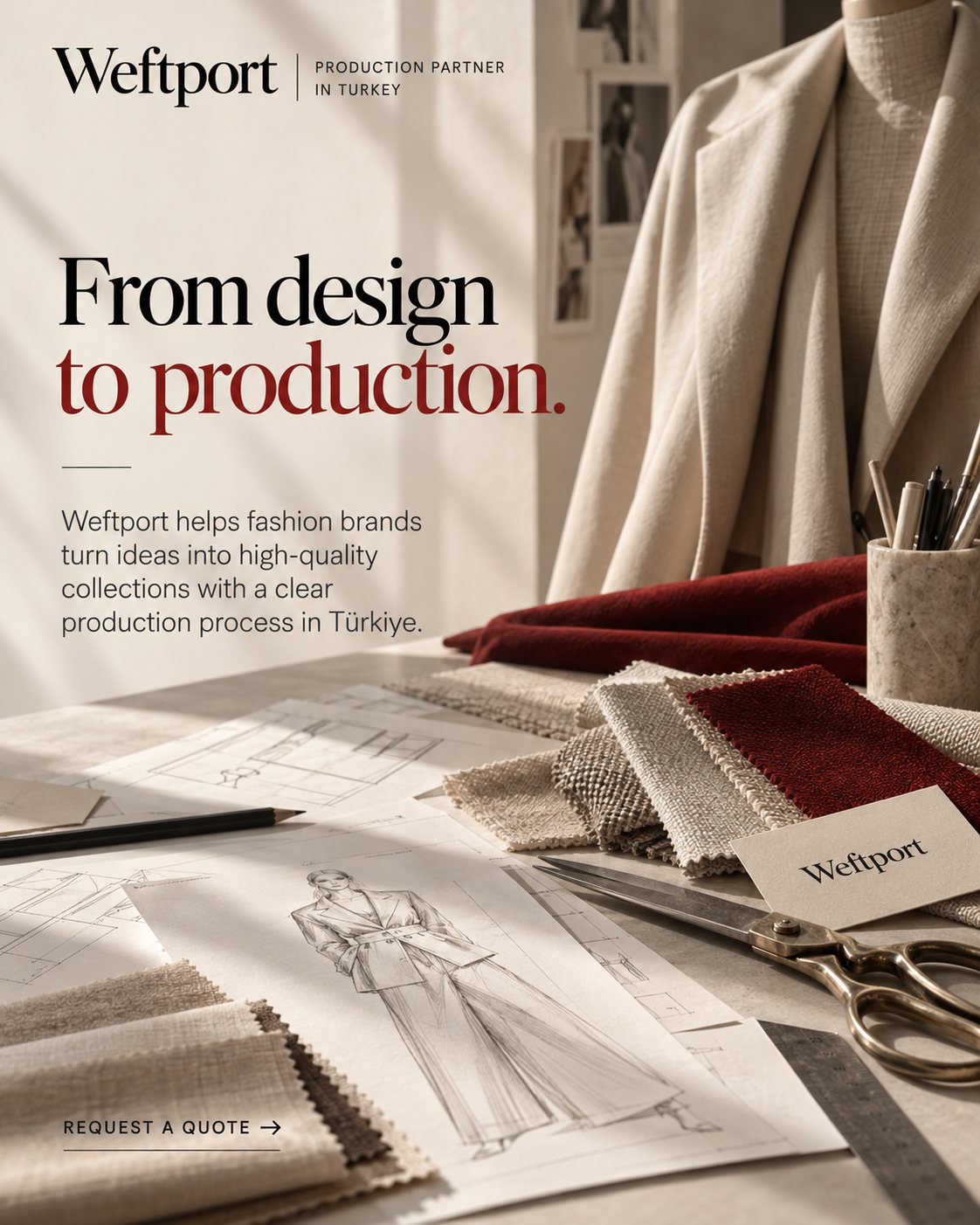
A factory cannot produce a mood. It needs a specification. The usual format is a tech pack: a document with flat sketches, measurements, construction notes, fabric and trim details, and placement of labels. The more complete it is, the fewer questions come back, and the fewer surprises appear in the first sample.
If you do not have a full tech pack, you can still start. A clear sketch, a reference garment, a size chart and your fabric idea are enough for an initial conversation. Our tech pack checklist lists what a good brief contains.
Briefing and quotation
The briefing is where the project is defined: product category, estimated quantity, target market, fabric direction and the timeframe you are working towards. Weftport works on custom production based on your own design, with projects starting from 500 pieces and no upper limit.
The factory then prices the style based on fabric, construction, trims and quantity. Two things make a quotation comparable between suppliers: the same specification sent to everyone, and clarity about what is included. Ask what the unit price covers, which fabric it assumes and which quantity break it is based on.
Sampling is where the design meets reality
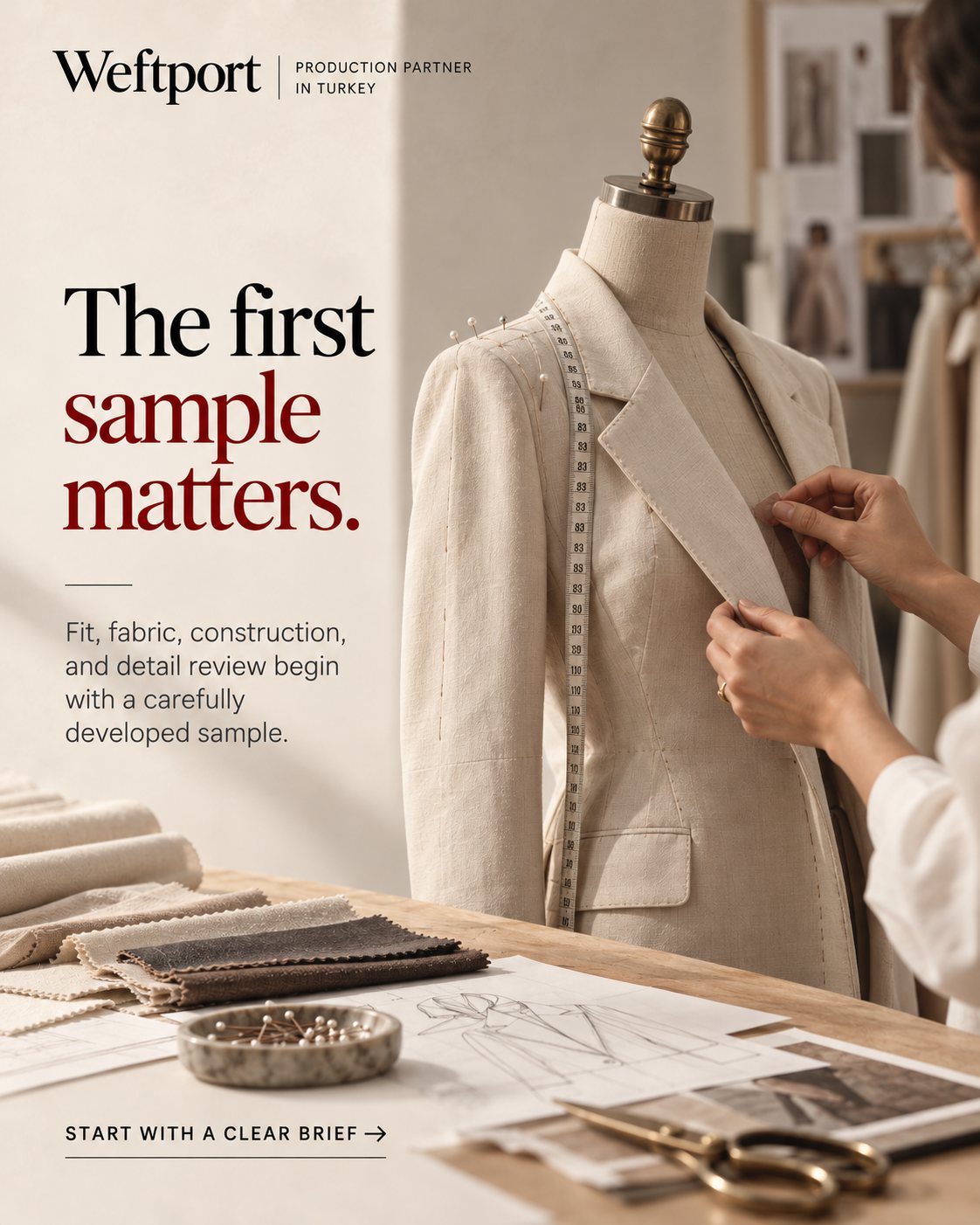
The first sample is the point where drawings turn into a garment. You review fit, fabric behaviour, construction and details. Expect corrections. A sleeve that looked right on paper may sit differently on a body, and a fabric may drape heavier than you imagined.
Good practice is to consolidate your feedback into one clear list per sample round rather than sending comments in pieces. Photographs with measurements marked on them save a surprising amount of time. Our article on why the first sample matters goes deeper.
From approval to cutting, sewing and finishing
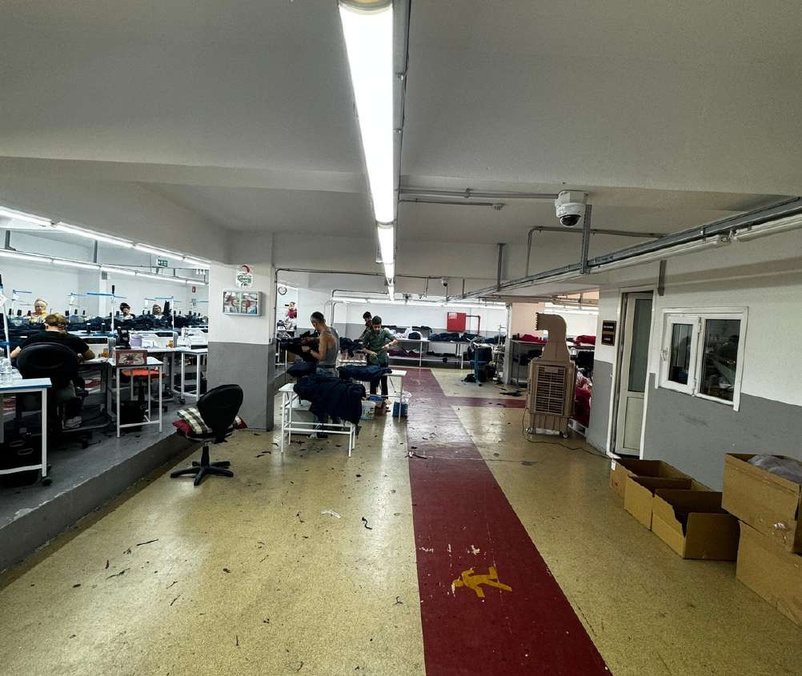
Once a sample is approved, the order moves into production. At our partner factory in Istanbul, incoming fabric is inspected first, and fabric with defects is set aside before cutting. Then come cutting, sewing, ironing, quality control and packing. Each stage has its own checks, so problems are caught close to where they happen rather than at the end.
For you as the buyer, the useful questions at this stage are: which approved sample is the reference, who signs off on any change, and when do you expect progress information.
Delivery and what comes after
The last step is packing and shipment according to your instructions: how garments are folded or hung, how labels and hangtags are applied, how cartons are marked. These details are easy to forget and expensive to correct later, so confirm them before production starts, not after.
When the goods arrive, compare them with the approved sample and your checklist. Keep notes of anything you would change next season. A second order is usually smoother than the first because the specification is already proven.
Common mistakes that slow projects down
Most delays are avoidable. The usual causes are an incomplete specification, fabric chosen late, feedback sent in fragments, and changes requested after the sample was approved. A change after approval is not impossible, but it should be agreed in writing, because it can affect cost and timing. Another frequent issue is unclear size splits: confirm how many pieces go into each size before cutting starts, since cutting is hard to undo.
A short checklist before you begin
- A tech pack or, at minimum, flat sketches, measurements and a reference garment.
- Fabric direction, even if the final fabric is still open.
- Estimated quantity per style and per size split.
- Target delivery window and where the goods are going.
- Packing and labelling requirements.
If you have these, you are ready for a useful conversation. You can see how we organise the steps on the process page, or tell us about your project and we will come back with questions and a next step.
FAQ
What do I need to start a clothing production project?
At minimum, flat sketches or a reference garment, measurements, a fabric direction and an estimated quantity. A complete tech pack makes the quotation and the first sample more accurate.
What is the minimum order quantity?
Weftport projects start from 500 pieces, and there is no upper limit.
Do you produce denim?
No. Denim is not part of the range. Woven and knitted garments in womenswear, menswear and kidswear are.