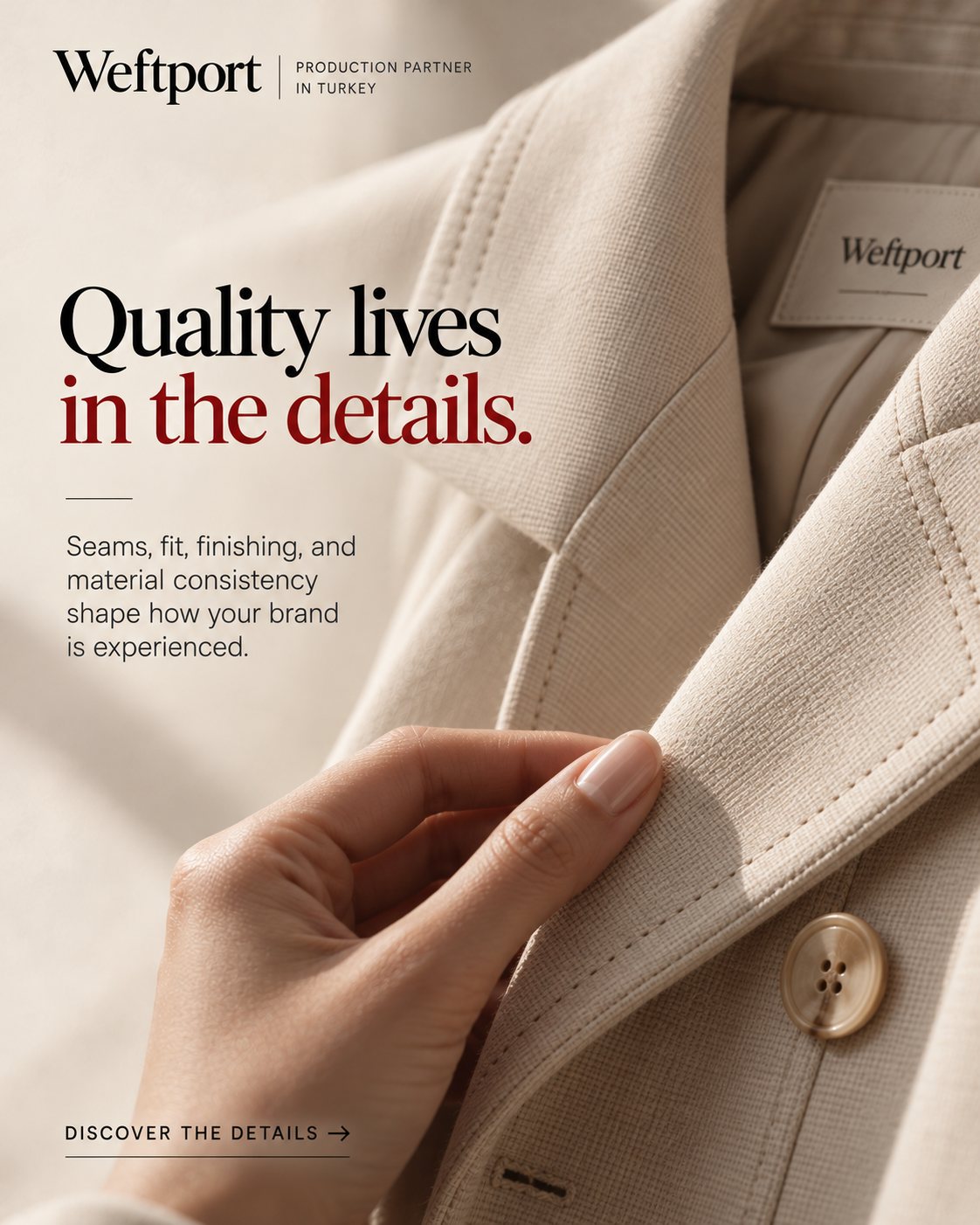
Customers rarely judge a garment by its sketch. They judge it by how it feels, fits and lasts: a seam that stays flat, a colour that does not fade, a button that stays on. That is why quality control is not one inspection at the end but a series of checks across the whole production path. This guide explains where those checks happen and how you can take part.
Quality starts with the fabric
The first checkpoint is incoming fabric. At our partner factory in Istanbul, fabric is inspected on arrival, and fabric with defects is set aside before cutting. This matters because a flaw in fabric becomes a flaw in every garment cut from it. Ask any supplier how they inspect incoming material and what they do with rejects.
Laboratory and performance tests
Beyond visual inspection, several properties are tested. The quality workflow at our partner factory mentions:
- Laboratory testing of fabric.
- Appearance after wash, which shows how the garment looks after laundering.
- Dimensional stability, which measures shrinkage or growth.
- Colour fastness, which shows whether colour holds under conditions such as washing.
- Rubbing fastness, wet and dry, which shows whether colour transfers when rubbed.
- A 90 N test for buttons and snaps, which checks that they stay attached under pulling force.
For the full overview, see our quality page. Test requirements for your market remain your responsibility, so share them early.
Colour control
Colour disputes are common and avoidable. A colour light box lets the team compare shades under standard light sources, such as D65, TL83, UV and F, which reduces disagreements caused by lighting. Ask for colour approval to be recorded against a physical swatch.
Inspection during production
Quality is easier to protect during production than to repair afterwards. Cutting, sewing and ironing are followed by quality control and packing. Checks along the way catch problems close to where they occur: a misaligned pocket is cheaper to fix on the line than in a finished carton. Ask how often inline checks happen and who is responsible.
Final inspection and packing
Before shipment, finished garments are checked against the approved sample and specification. Typical points are measurements, stitching, pressing, cleanliness, labels, trims and packing according to your instructions. Define the checklist with the factory before production starts so everyone inspects against the same criteria.
What you can do as a buyer
- Provide a clear specification. Quality cannot be measured against a vague target.
- Set tolerances. State acceptable measurement deviations.
- Approve a reference sample and keep a copy.
- Record colour and fabric approvals.
- Agree the inspection checklist and packing instructions.
- Review the delivery against the sample and report issues promptly.
What quality control cannot do
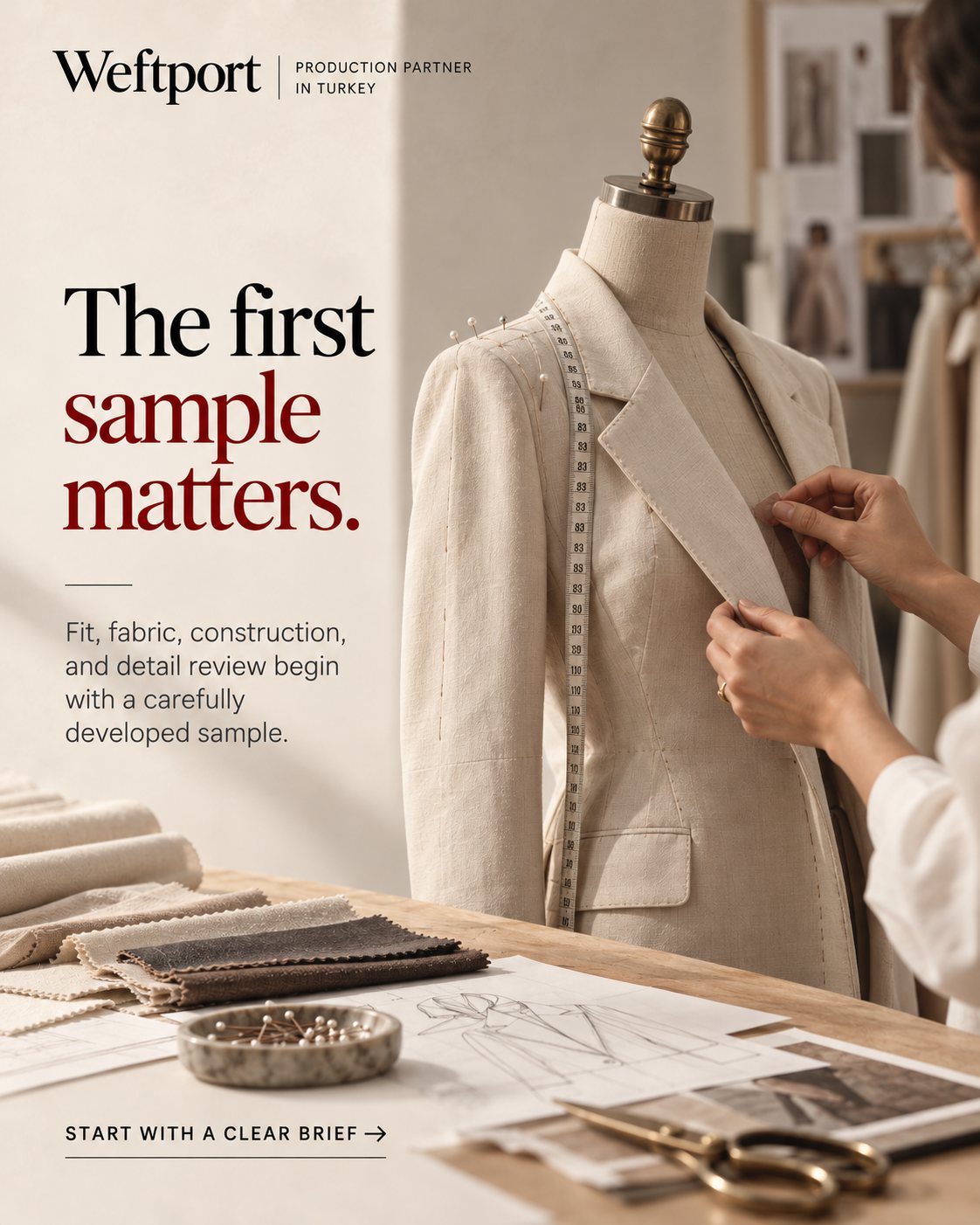
Quality control checks that a product matches its specification. It cannot fix a specification that does not suit your customer. If a fabric pills in use or a cut does not flatter your market's body shapes, the factory can only reproduce it faithfully. That is why sample review matters, and why we recommend reading our guide to the first sample.
Questions to ask any manufacturer
Ask how incoming fabric is checked, what tests are performed, how colour is approved, how often inline checks occur and what the final inspection covers. Notice whether the answers are specific. Specific answers usually indicate that the process exists in practice.
Building quality into your own process
Quality is shared work. Even with a strong factory process, your own habits matter: keep approved samples labelled and stored, record every change in writing, and review each delivery against a checklist. When something goes wrong, bring photos, measurements and the sample reference. A specific report leads to a specific correction, and a documented pattern of issues can be addressed at the source rather than repaired case by case. Over several orders, this discipline builds a reliable record of what your brand considers acceptable, and the whole relationship becomes faster and calmer. Share what you learn with the factory after each delivery, including what went well, so good practice is repeated on purpose.
Next step
Read more about our approach on the quality page, or send us your project with your test and labelling requirements.
FAQ
What tests are part of the quality workflow?
Fabric inspection, laboratory testing, appearance after wash, dimensional stability, colour fastness, rubbing fastness (wet and dry) and a 90 N test for buttons and snaps.
What happens to defective fabric?
Defective fabric found during inspection is set aside before cutting.
How is colour checked?
With a colour light box under standard light sources.